A good one and a good-ish one in a very disappointing year so far for cinema.
28 Years Later

Last weekend I was up north at my parents’ cabin, halfway through a bottle of something, standing on their patio overlooking a gorgeous serene lake with a couple industry-adjacent buddies (read: an agency creative and a guy who consults for HOAs) and we got into this increasingly passionate, fairly intoxicated debate about AI in art. Ethics, authorship, pure laziness, etc. But what stuck with me was this shared realization that we’re in the middle of a full-blown creative recession in the arts. Mainly in film and television, and while I’m not an authority when it comes to music, they informed me music as well. Even the “best” post-COVID stuff would’ve been second or third tier art in any other time period. It’s tempting to say after a hundred years of cinema, we’ve run out of things to say. But that’s not it. It’s more like everyone’s afraid to say anything because everyone is afraid to actually feel something. Or worse, no one’s willing. I miss being surprised, or excited, or even pissed the fuck off. I go to the movies to be moved. As cliché as it sounds, I want to be ripped from my chair by the scruff of my neck and thrown haphazardly into the unknown. Hell, I’ll even settle for disgust or confusion if it means some young, pompous, self-described auteur actually swings for the fences. That’s why this week was a good week at the movies. I saw two films that, while far from perfect, felt like they were at least trying to shake things up and jab a stick in the spokes of the usual formula. We’ll get to the absolute bananas Hallmark-movie-on-crank that is Life of Chuck later, but right now let’s talk about 28 Years Later, a two-decades-later sequel that somehow, against all odds, manages to be heavy, weird, uneven, and way more interesting than any third film in a zombie franchise (the most overplayed sub-genre in horror) has any right to be.
I’m a big fan of the original 28 Days Later, which came out the summer between seventh and eighth grade for me. It’s one of the best horror films of the 21st century and it (alongside maybe Shaun of the Dead) represent the only truly fresh addition to the zombie sub-genre since George Romero‘s Dawn of the Dead. 28 Days Later is just so frightening and plausible, and the camcorder aesthetic gives it this urgency and relevance that’s hard to shake. It also smartly follows a clear roadtrip plot structure with a group of well-defined characters you actually care about. Four years later, Danny Boyle (the original’s director) produced the sequel, 28 Weeks Later, by a different director and it’s kind of a mess. Despite a fantastic opening sequence, it really devolves into a convoluted and generic army vs. zombie movie we had seem a hundred times. So as I walked into 28 Years Later some 22 years later after the original, I was cautiously optimistic, and surprisingly, it mostly delivers. It’s not as tight or groundbreaking as the original, but it’s absolutely a step up from the last attempt, with some truly great set pieces and a handful of ideas that go way deeper psychologically than I expected.
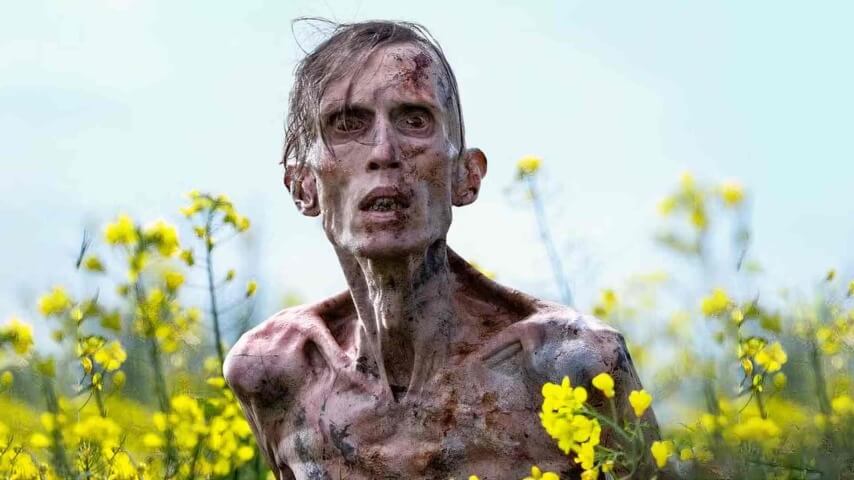
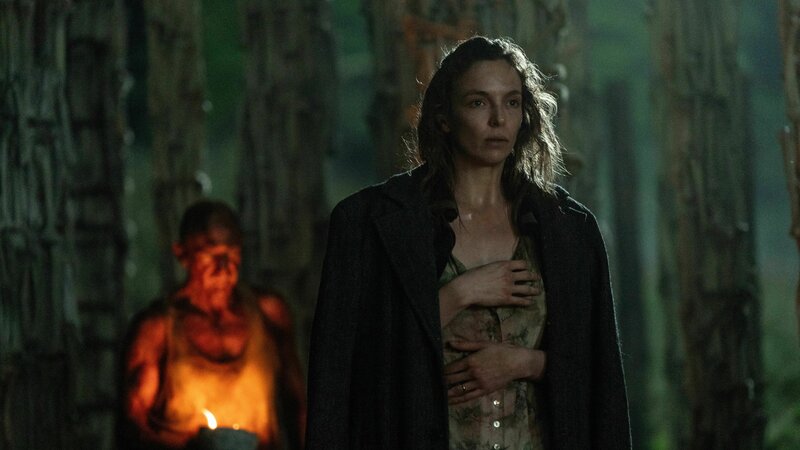
Here’s where I briefly describe the plot but am careful not to go into too much detail: It’s been nearly three decades since the initial outbreak, and humanity is still trying to piece itself back together. The U.K. remains quarantined and uninhabitable…or so they think. When signs of activity pop up in the infected zones, a military team of French and Swedes is sent back in. There’s a group of survivors living in a quarantined part of the island (very Last of Us) that include Aaron Taylor-Johnson, his very sick wife played by Jodie Comer, and their bright and capable 12-year-old son, Spike (Alfie Williams), who turns out to be one of the strongest parts of the movie. Without giving too much away, they quickly realize the infection has mutated and evolved, and now we have eight-foot zombies with fourteen-inch flaccid dicks swinging around as they run after people and rip their heads off. It sounds funny but it’s actually quite terrifying.
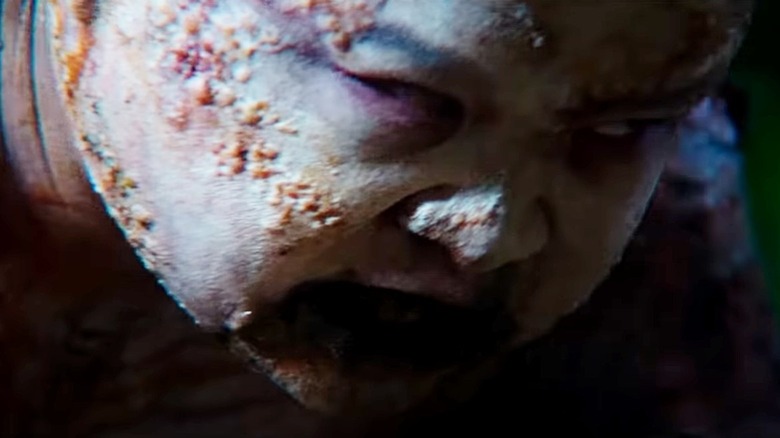
The first 25 minutes are among the best stretches of zombie cinema I’ve ever seen. Suspenseful, beautifully shot, and genuinely terrifying. But as the film moves forward and introduces more characters and storylines, it starts to lose focus. It feels like two very different movies stitched together, and the tone shifts so much that you start to feel the seams coming apart. Then, out of nowhere, the final few minutes shift again, and a completely different third movie emerges. Some will love it, some will hate it, most everyone will be confused. Personally, I loved it and it sent me out of the theater in a better mood than I felt all day.
Acting-wise, 28 Years Later doesn’t miss a beat. I usually find Aaron Taylor-Johnson a little stiff, but he’s actually quite strong here, very grounded and believable. Jodie Comer is phenomenal as always, no surprises there, and young Alfie Williams gives a sharp, natural performance that never veers into obnoxious-kid-territory. Ralph Fiennes also pops in for a short but unforgettable role as an iodine-drenched doctor who looks like a walking corpse. He might be the most complex character of the film and he gets little more than 15 minutes of screen time.
While 28 Years Later doesn’t quite recapture the raw power and energy of the original, it truly swings for the fences, and in this creative recession, that’s all I can ask of Boyle and writer Alex Garland. Even when it stumbles, you get the sense they are trying so hard to do something unique with the franchise. And honestly, I’d rather see a flawed film with big ideas than another safe sequel phoning it in while trying to sell me pop tarts and Verizon wireless. Grade: B (In Theaters)
The Life of Chuck
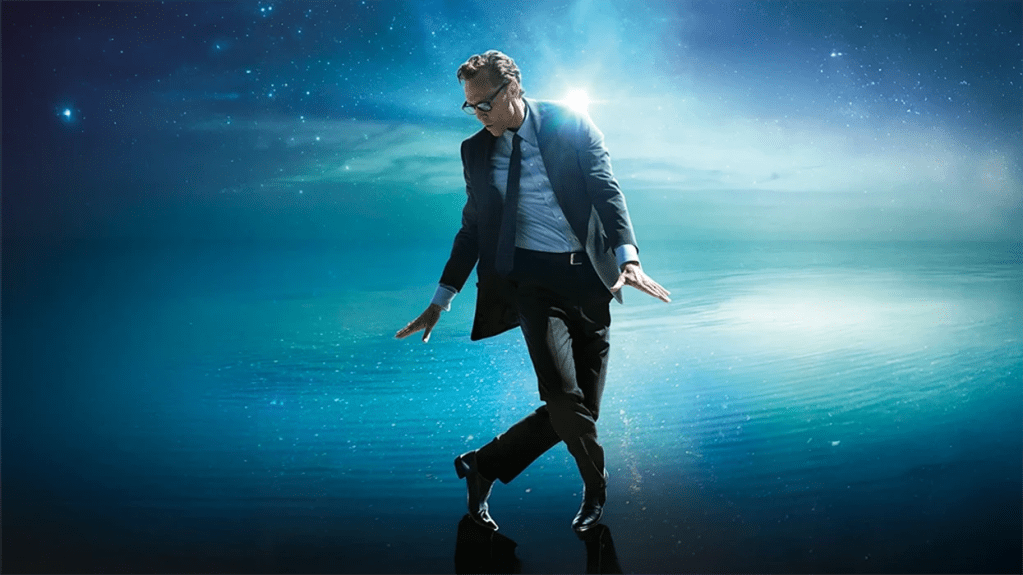
Some movies are beautiful, ambitious, and well-acted, but also make you want to gag into a throw pillow. That’s The Life of Chuck, Mike Flanagan’s heartfelt adaptation of a lesser-known Stephen King short story that feels like three different films duct-taped together with emotion, sincerity, and a jazz-hands-level commitment to meaning. Ughhhh.
Told in reverse, the film begins with Act Three, Chuck’s (Tom Hiddleston) death, and works backward through the emotional wreckage of his life until we arrive at Act One, where baby Chuck, kid Chuck, and teen Chuck (Cody Flanagan, Benjamin Pajak, and the fantastic Jacob Tremblay) waltz into our hearts with a level of charm that makes the rest of the movie feel like an overwrought eulogy. It’s not a bad film by any stretch. It’s visually rich, well-acted across the board, and frequently unpredictable. But ay chihuahua, is it sappy, like if someone took 50 inspirational wooden signs you’d buy at the Hallmark store, like “Just Breathe” and “Family. Faith. Courage.” and then adapted those signs into a movie but also added some f-bombs and adult themes. It’s fucking weird.
Anyway, the story opens with middle school teacher, Marty Anderson (Oscar nominee Chiwetel Ejiofor), trying to rekindle things with his ex-wife, Felicia Gordon (Karen Gillan, reuniting with Flanagan after 2013’s Oculus). As their personal drama simmers, the world literally begins to fall apart: the internet stops, the sky explodes, and the cable goes out. The only thing that remains? Mysterious digital ads announcing Chuck’s 39th birthday. Are aliens responsible? Who knows. Who cares. That’s not really the point.
The second act centers on adult Chuck, a banker stuck in a soul-sucking routine (cliche alert!), who one day, encounters a street drummer and then suddenly breaks into an elaborate five-minute dance number. It’s hands-down the most entertaining moment in the movie, and a fun reminder that Tom Hiddleston is such a talented, well-rounded performer.
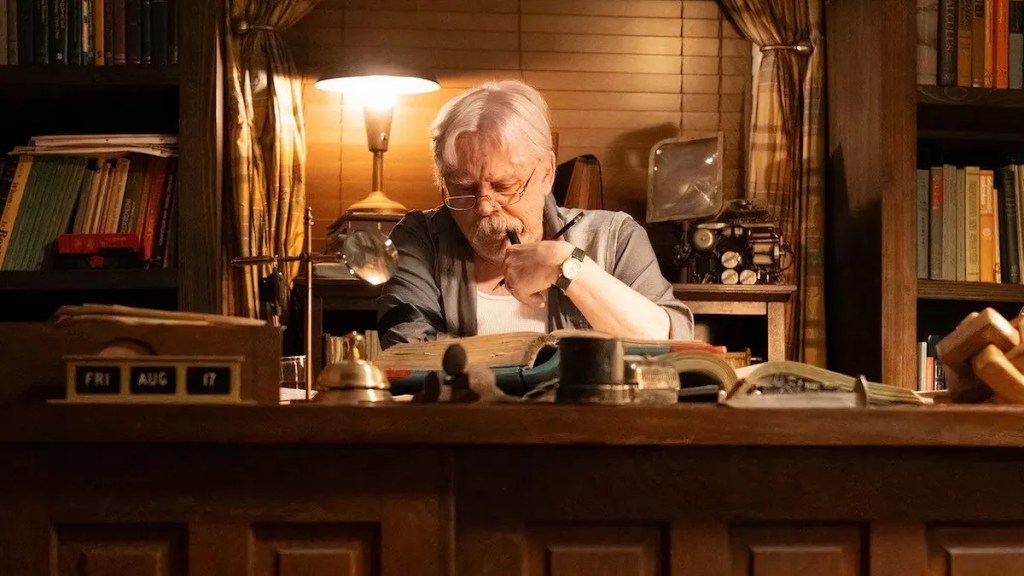
In the final act (chronologically the first), we explore Chuck’s childhood. This section is the strongest, brimming with warmth and that signature Stephen King nostalgia. Mark Hamill and Mia Sara (yes, Ferris Bueller’s Mia Sara) are excellent as Chuck’s grandparents/legal guardians. The young actors are equally impressive, and honestly, this whole portion should have been the entire movie.
The cast as a whole is terrific, even if most of them don’t have nearly enough to do. Ejiofor, Gillan, Matthew Lillard for a hot second, and the rest of the ensemble deliver strong work, lending gravitas and sincerity to a story that doesn’t always earn it. Hiddleston, in particular, is doing the most with relatively limited screen time, and he’s rarely been better.
Compared to Flanagan’s thrilling and emotionally resonant miniseries work like The Haunting of Hill House or the incomparable Midnight Mass, The Life of Chuck doesn’t hit the same intellectual or emotional high notes. It’s uneven, structurally weird, and more than a little self-indulgent. But still, there’s something admirable about how earnestly it swings for the fences. In a cinematic landscape where weirdness and vulnerability often get sanded down, Flanagan is daring enough to make something personal, odd, and deeply sincere. It may not all come together, but you can’t say it doesn’t mean it. Grade: B- (In Theaters)
 Margetis Movie Reviews