
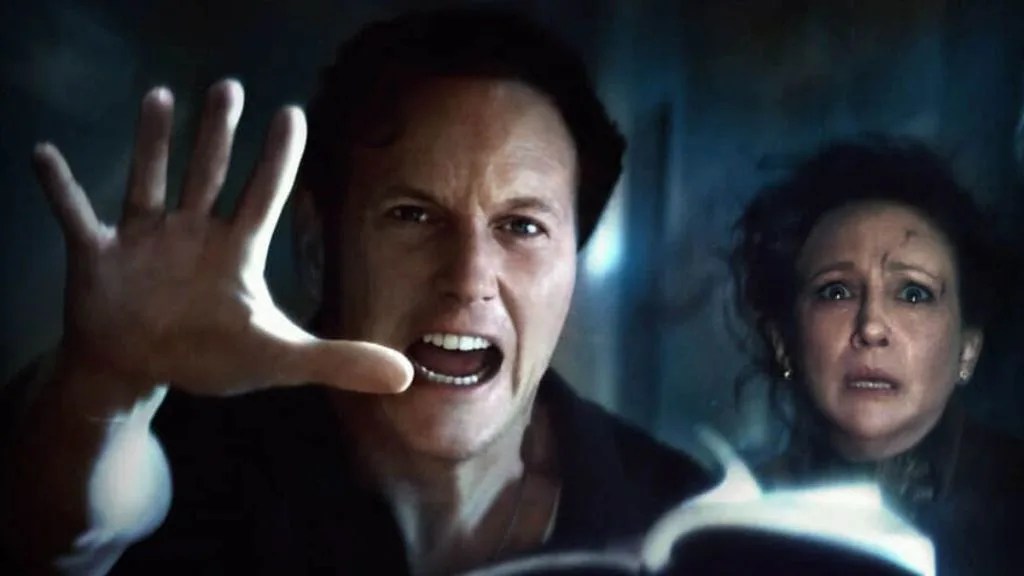
One unexpected hero this week.
The Conjuring 4: Last Rites

Objectively, The Conjuring 4 is not the worst film of the year, but I don’t give a shit. I absolutely despise it. I loathe every creatively bankrupt, flatly shot frame of this offensively overlong, self-important-to-the-point-of-delusional, and completely, 100% not scary horror franchise sequel.
Apparently, it’s the last one, but that’s bullshit. The Conjuring franchise is a parasite. It’s already spawned spin-offs like The Nun, Annabelle, and the Mexican ghost lady story where most of the cast was white. If you think this is the last we’ll see of this franchise, or of Ed or Lorraine Warren, you’re kidding yourself.
We’re going to be plagued with garbage like Nun: Origins and Mexican Ghost Lady 2: Curse of the Gringo for years to come. I just wonder how we find an exorcist to purge this crap from our multiplexes. What’s Marty Scorsese doing?
The fourth and “final” entry in the official Conjuring series is called Last Rites, and apparently it focuses on an evil (a big dude with an axe that kinda looks like Gary Busey) that Lorraine and Ed encountered back when they were young and pregnant with their daughter. This evil nearly caused Lorraine to deliver a stillborn baby, but through the power of prayer, the baby was given a second chance by Jesus to be a person. Score: 1 – Jesus, 0 – Gary Busey Giant.

Years later, in 1986, their daughter is the most adult we’ve ever seen her in the franchise and is dating a nervous, unemployed marshmallow. The movie devotes almost half its runtime to basic, shallowly written family tableau scenes meant to tug at our heartstrings: the marshmallow nervously asking Ed and Lorraine for their daughter’s hand in marriage, Lorraine and her daughter talking about the responsibilities of being an adult who can communicate with demons, Ed tries to curb his diet because of a heart condition, etc.
It’s all real boilerplate Kodak commercial bullshit, and my audience (fully packed, Friday night) just wasn’t buying it. Every time one of these scenes came on, people turned to their neighbors and started talking at full volume. Worst theater etiquette I’ve ever seen, but honestly, I didn’t care. I think I browsed Letterboxd for a solid five minutes during one of them.
And yet, whenever anything “scary” happened, the audience ate it up. That was disappointing, because nothing here is actually scary. Jump scares are startling, not scary. They just flash something onscreen so fast your brain can’t process it, and once it does, your mind goes, “Oh. That’s dumb.”
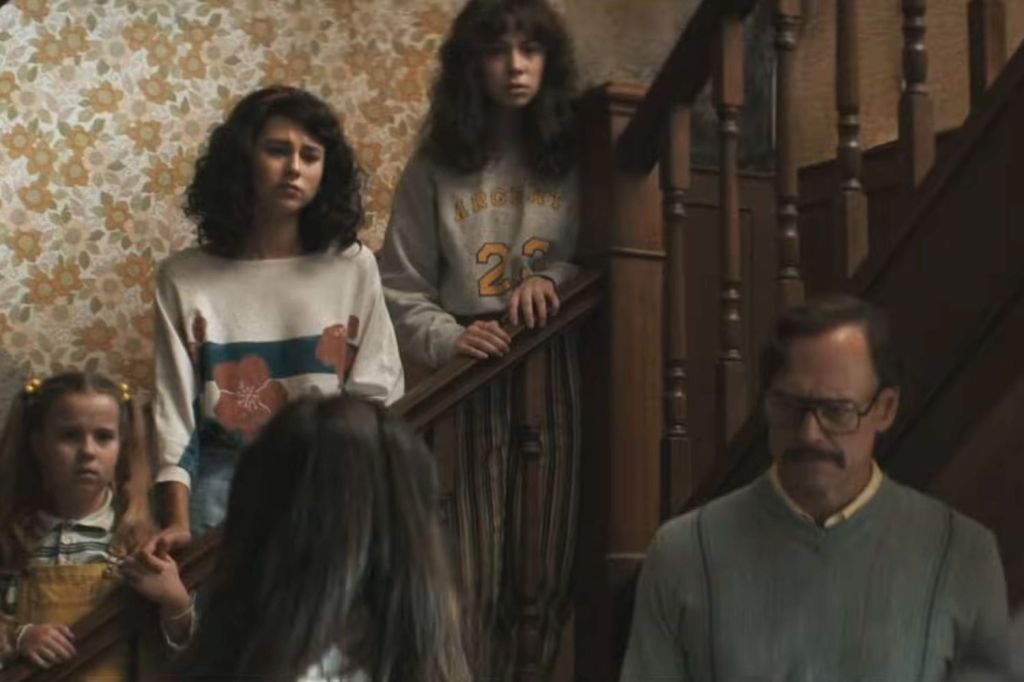
It probably sounds like I’ve always hated this franchise, but I haven’t. Twelve years ago, when the original The Conjuring came out, I really enjoyed it. It was a well-made, legitimately inventive, and genuinely scary piece of haunted house cinema. It didn’t reinvent the wheel, but it was probably the best mainstream horror movie I saw that year.
Three years later, The Conjuring 2 dropped—and to my surprise, it was almost as good. A solid ghost story with some surprisingly well-developed characters, even if it kinda fell short in the scare department.
Then came the flood of crappy Annabelle and Nun spin-offs. Oddly enough, Annabelle Comes Home (the third Annabelle movie) is one of my favorites in the extended universe, while The Conjuring: The Devil Made Me Do It, the third Conjuring movie, released at the height of COVID, was just a boring piece of shit.
I want these movies to be good. We need dumb, unchallenging escapist entertainment. If all I watched were Criterion films, my brain would start to bleed. But they still need to be done well, and with some actual care.
This franchise? It’s become an obvious, soulless studio cash grab. No one gives a shit anymore.
Maybe the real demon was Warner Bros. all along.
Grade: F (Now Playing in Theaters)
Caught Stealing

Caught Stealing feels like Darren Aronofsky found a knockoff of a knockoff of a Tarantino script from 1998, dusted it off, and filmed it. In reality, I guess that’s not what happened. I guess this is supposed to be a loving nod to the smart-ass Tarantino knockoff wave of the late ’90s/early 2000s, most notably a Guy Ritchie-style gangster movie, just without the indecipherable Cockney accents and with a more all-American New York City setting.
The problem for me is I’m not nostalgic for those movies. Mostly because they weren’t very good. Most of them completely misunderstood why Tarantino worked in the first place.
Caught Stealing mostly just feels like Lucky Number Slevin or Smokin’ Aces, but with better performances, and a super dramatic, emotional side to the main character that no one asked for… except maybe Austin Butler.
Butler plays a wild, reckless young guy who works at a bar and is going nowhere fast. His girlfriend is Zoë Kravitz, and they have awesome sex. One day, his foul-mouthed English neighbor with a mohawk (a fun Matt Smith) asks him to cat-sit while he heads back to England, something about his dad being sick.

What Butler doesn’t know is that hidden in the neighbor’s apartment is a key to a pile of money a bunch of criminals are after. So he becomes the accidental patsy, getting beaten up and interrogated by people who assume he knows way more than he does. From there, he stumbles from one dangerous situation to another until the movie wraps up in a fairly predictable way.
There are a lot of performances, some really good (Liev Schreiber and Vincent D’Onofrio are superb as Hasidic Jew Hitmen), others just okay. There are a few genuine surprises in the narrative, one even made me audibly gasp.
But then there’s all this other unexpected stuff, like a past-trauma subplot for Butler’s character that completely drains the fun out of the movie. You can feel the internal tug-of-war. One half wants to be a dumb, fun action thriller. The other wants to be a heavy story about personal redemption.
The former is way more doable, especially since none of the characters or relationships are particularly deep. Caught Stealing has all the bones of a light, entertaining action flick (especially if they trimmed 20 minutes), but as it stands, it’s a major feel-bad downer that didn’t enlighten me at all.
It just made me want to watch a Tarantino movie.
Grade: C (Now Playing in Theaters)
Splitsville
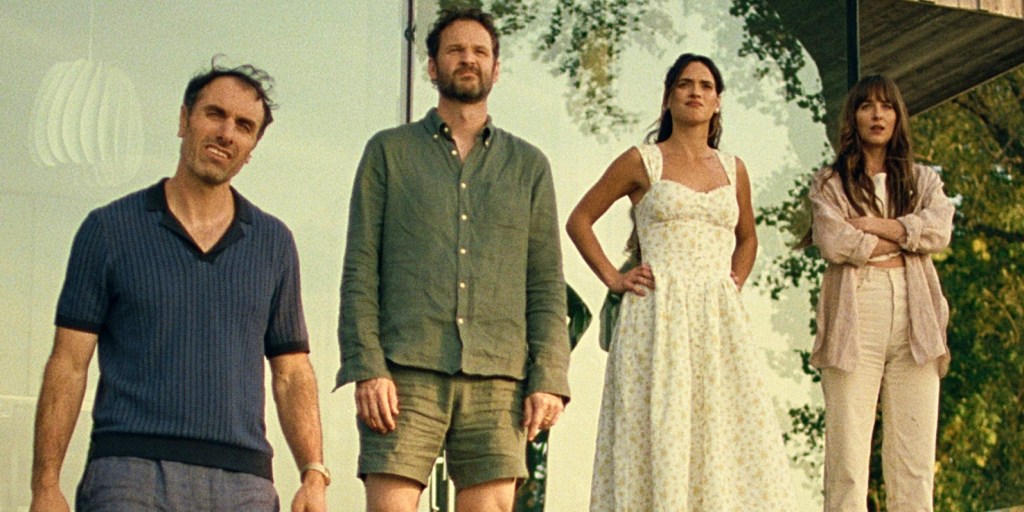
Splitsville is a very smart, non-romantic comedy about the sexual politics of relationships, following four complex characters across two couples. It was a huge hit at this year’s Cannes Film Festival and, for most people, a laugh-out-loud riot. While I do think a lot of the movie is very funny, I didn’t find it quite as hilarious or slam-dunk future classic as most of the hype suggested. However, this is a very well-made comedy that’s actually about something and actually has something it wants to say.
Splitsville begins with what is arguably the best scene in the movie, an aggressively funny, shocking cringe-fest that introduces our first couple and sets up the central conflict beautifully. I won’t spoil the details, but something happens that causes Ashley (Adria Arjona) to ask her new husband, Carey (the film’s co-writer, Kyle Marvin), for a divorce. She reads him a letter confessing to countless affairs during their 13-month marriage and says she wants out.
Unable to handle this, Carey bolts from the car and runs through the countryside for what feels like three to six hours, walking, crawling, and staggering through the wilderness to reach their couple friends’ house. When he finally arrives, looking like he’s been through hell, they casually inform him Ashley already stopped by and told them everything.
The friends are Carey’s best friend, Paul (the film’s director and co-writer, Michael Angelo Covino), and his wife Julie (Dakota Johnson). You immediately get that this couple is very fucking weird. Both of them, especially Paul, have a habit of crossing social boundaries that most people instinctively respect. They reveal they have an open marriage, and Paul claims he doesn’t care who Julie sleeps with.

Of course, Paul goes into the city for work, and Carey and Julie end up sleeping together. Carey thinks it’s no big deal and tells Paul when he returns. Paul reacts by beating the absolute shit out of Carey in a fight sequence that plays like a live-action violent cartoon. It’s hilarious and brilliantly staged, complete with blowtorches, table legs, and fish, and lasts about as long as the alley brawl in They Live.
This sends Carey back home, where his not-yet-ex-wife Ashley is now banging an airhead Gen Z guitarist (Charlie Gillespie, who gives hands down the funniest performance in the film). Carey’s fine sleeping on the couch, which drives Ashley even crazier.
From there, the movie twists and weaves through several unpredictable plot points, following the four characters and their evolving relationships over what feels like four or five years. There’s a bit of extravagant physical comedy, most of it works, and a lot of very clever dialogue. I never howled laughing, rarely laughed out loud, but consistently appreciated how funny and inventive much of it was.

The most glaring issue is that the two male leads, who are also the film’s co-writers and director, just aren’t as seasoned or nuanced as their female counterparts. Sometimes you don’t notice, but during emotionally charged scenes, Marvin and Covino’s performances stick out like a sore thumb compared to Johnson and Arjona’s work. That said, they’ve done such a strong job writing and directing, and clearly understand these characters, so it’s hard to be too annoyed.
Also, they really make a meal out of the fact that Kyle Marvin has a massive penis. The actor and by extension, the character. Like, more than Forgetting Sarah Marshall did with Jason Segel. It’s a really fat cock, but the movie leans into it so hard that it starts to feel a more than a little braggadocious.
Besides that, the film drags a bit in the middle, you really feel it, and the second half includes a few cliched plot contrivances involving Paul and Julie’s kid. But it ends on a genuinely sweet note and never stoops to shaming anyone for living an alternative romantic lifestyle.
Grade: B+ (Now Playing in Theaters)
 Margetis Movie Reviews